Serotonin Functions
Why This One Chemical Shapes Your Mood, Focus, and Career Growth

Many mid-career tech professionals describe the same pattern.
They wake up tired.
They push through the day.
They finish tasks.
They feel no joy.
Nothing is “wrong” on paper. Salary is stable. Role is secure. Skills are strong. Yet energy feels flat. Motivation drops. Even small wins feel empty.
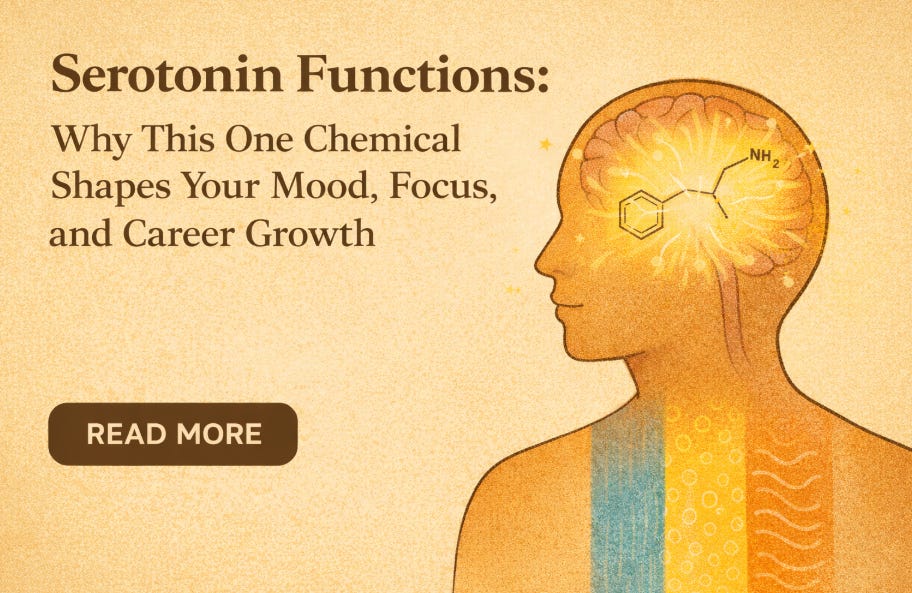
Often, serotonin sits at the center of this experience.
Serotonin is a chemical messenger in the body. It affects mood, sleep, digestion, focus, and emotional balance. When levels stay steady, you feel calm and grounded. When levels drop or fluctuate, irritability rises. Fatigue increases. Motivation fades.
This blog explains what serotonin does, how stress affects it, and how you can support healthy function through simple daily practices. It also connects this science to creative reset methods that work for logical minds.
Let us begin with the basics.
What is serotonin
Serotonin is a neurotransmitter. It helps nerve cells communicate. Most people connect it only to mood. Its role goes far beyond that.
About 90 percent of serotonin exists in the gut. A smaller amount works inside the brain. This link between gut and brain explains why stress affects digestion and mood at the same time.
Serotonin does not create excitement. It creates stability. It gives a sense of contentment. It supports steady confidence rather than high bursts of pleasure.
When serotonin works well, you feel balanced. When it drops, you feel off.
Core functions of serotonin
Here are the major areas serotonin influences.
Mood regulation
Serotonin supports emotional stability. It reduces extreme mood swings. It supports a steady sense of well-being.
Low serotonin often links with low mood, irritability, and emotional numbness. High stress can disturb this balance.
Sleep quality
Serotonin helps regulate sleep cycles. It plays a role in producing melatonin, the hormone that controls sleep-wake rhythm.
When serotonin levels drop, sleep becomes light and broken. Many professionals fall asleep late and wake up tired.
Appetite and digestion
Since most serotonin lives in the gut, it affects digestion. It helps regulate bowel movements and appetite signals.
Chronic stress disrupts gut function. Appetite fluctuates. Cravings increase. Energy drops after meals.
Focus and cognitive clarity
Stable serotonin supports clear thinking. It helps the brain shift between tasks smoothly.
Low levels can create brain fog. Decision making slows. Motivation decreases.
Stress response balance
Serotonin helps regulate how the body responds to stress. Balanced levels reduce overreaction to pressure.
When serotonin drops, even small triggers feel intense. Recovery from stress takes longer.
Why tech professionals struggle with serotonin balance
High-pressure roles keep the nervous system active. Deadlines pile up. Screens dominate time. Physical movement drops. Emotional expression stays limited.
All of this affects serotonin.
Chronic stress increases cortisol. Elevated cortisol disrupts serotonin production. Sleep drops. Gut health shifts. Mood becomes unstable.
Many professionals assume they lack discipline. They push harder. They drink more caffeine. They cut calories. The cycle deepens.
The issue lies deeper than willpower.
Signs your serotonin may be low
You may notice:
• Constant fatigue even after rest
• Low mood without clear reason
• Reduced interest in activities
• Digestive discomfort
• Difficulty focusing
• Cravings for sugar or carbs
• Light or broken sleep
These signs often appear together. They affect work performance and personal life.
Career growth depends on stable energy and clarity. Serotonin supports both.
Is willpower enough to fix this
No.
You cannot force serotonin balance through motivation alone. The body needs support at multiple levels.
That support includes sleep rhythm, gut health, sunlight exposure, physical movement, emotional release, and creative expression.
Many professionals focus only on diet and exercise. These help. They do not address stored emotional stress.
Stored stress blocks serotonin balance.
The link between suppressed emotion and serotonin
Emotions that stay unprocessed keep the nervous system alert. This prolonged alert state drains neurotransmitters.
Suppressed frustration tightens the jaw.
Unspoken fear shortens breath.
Silent pressure stiffens shoulders.
This tension keeps the body in defense mode. Defense mode disrupts serotonin stability.
Emotional processing restores balance.
Logical minds often struggle with emotional processing through conversation. Art offers another route.
How creative practices support serotonin
Creative activity stimulates multiple brain regions. It encourages flow states. It reduces cortisol. It promotes calm engagement.
When you paint or draw without judgment, your body shifts from stress mode to regulation mode. This shift supports serotonin function.
Even short sessions help.
Let me guide you through a simple serotonin-support art practice.
A 12-minute serotonin reset practice
You need:
• One sheet
• Three colors
• One pen
Step 1: Sit upright at a table. Keep your phone away.
Step 2: Draw three vertical columns on the page.
Step 3: In the first column, fill slow upward strokes using one calm shade.
Step 4: In the second column, draw small repeating circles in another shade.
Step 5: In the third column, draw gentle waves using the final shade.
Keep your breathing slow. Do not rush. Let your hand move steadily.
After finishing, place your palm on the page. Take one slow breath.
This repetition creates rhythm. Rhythm calms the nervous system. Calm supports serotonin balance.
Practice this after work or before sleep.
Daily habits that support serotonin
Sunlight exposure in the morning
Gentle physical movement
Balanced meals with protein
Consistent sleep timing
Creative expression
Social connection
Each habit strengthens regulation. Together they create stability.
You do not need perfection. You need consistency.
How serotonin balance supports career growth
Stable mood improves communication.
Clear focus improves performance.
Better sleep improves energy.
Balanced stress response improves leadership presence.
When serotonin stays steady, you feel grounded. Decisions feel clearer. Creativity rises. Burnout reduces.
This shift does not happen overnight. It builds through small daily resets.
A question to reflect on
How often do you feel calm satisfaction in your work week?
If that feeling rarely appears, your nervous system needs care.
The bigger picture
Serotonin is not a magic fix. It reflects overall nervous system health. Chronic stress disrupts it. Emotional suppression weakens it. Disconnection from creativity reduces it.
Supporting serotonin means supporting your whole system.
This is why structured creative practices matter. They provide a safe way to regulate the body without emotional overwhelm.
I guide professionals through these methods every week.
Your next step
If this topic resonated, you would benefit from deeper guidance.
I teach structured art-based stress reset methods designed for tech minds in my master class.
You can register in my Creative Reset Masterclass
The session helps you restore emotional balance, improve clarity, and rebuild calm through guided creative practice.
I also recommend exploring my mentor Sidz’s webinar. His training helped me build clarity and structure in my own journey as a digital coach. His session offers grounded direction for growth.
Serotonin supports calm strength. Calm strength supports growth. Small daily resets can shift your entire career path.